Yale University, located in New Haven, Connecticut, stands as one of the most prestigious and historically significant institutions of higher education in the United States. Founded in 1701, Yale is a member of the Ivy League and has cultivated a global reputation for academic excellence, influential research, and a rich tradition of intellectual inquiry. Over more than three centuries, the university has evolved into a leading center for education that shapes leaders, thinkers, and innovators across disciplines.
Historical Foundations
Yale University was established by a group of Congregationalist ministers who sought to create a college to preserve the tradition of European liberal education in the American colonies. Originally named the Collegiate School, the institution was later renamed Yale College in 1718 in honor of Elihu Yale, a Welsh merchant and benefactor who donated books and goods to the school.
The early years of Yale were marked by modest beginnings, with classes held in private homes and small buildings. However, by the 18th century, Yale had begun to establish itself as a center for intellectual development in colonial America. The university played a significant role in shaping the moral and political thought of the young nation, producing graduates who contributed to public life, including several signers of the Declaration of Independence.
Campus and Architecture
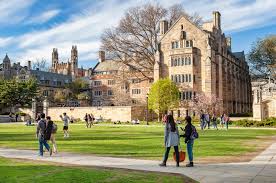
Yale’s campus in New Haven is renowned for its striking architecture, blending Gothic, Georgian, and modern styles. The university is organized into a system of residential colleges, each with its own distinct identity, traditions, and community. This system, inspired by the collegiate model of Oxford and Cambridge, fosters close-knit academic and social environments within the larger university.
Iconic buildings such as the Sterling Memorial Library and Harkness Tower define Yale’s skyline. The Beinecke Rare Book & Manuscript Library, one of the largest buildings in the world dedicated to rare books, houses invaluable literary and historical texts, including a Gutenberg Bible. Yale’s campus is not only a place of study but also a living museum of art and architecture.
Academic Excellence
Yale University offers a comprehensive range of undergraduate, graduate, and professional programs across its various schools. Yale College, the undergraduate division, provides a liberal arts education that emphasizes critical thinking, interdisciplinary study, and intellectual exploration. Students are encouraged to engage deeply with their chosen fields while also exploring diverse areas of knowledge.
The university is home to renowned graduate and professional schools, including the Yale Law School, Yale School of Medicine, Yale School of Management, and Yale School of Drama. These institutions are consistently ranked among the best in the world and attract top students and faculty from across the globe.
Yale’s faculty includes leading scholars, researchers, and practitioners who are at the forefront of their respective fields. The university’s commitment to teaching excellence is reflected in its low student-to-faculty ratio and emphasis on small seminars and discussion-based learning.
Research and Innovation
Research is a cornerstone of Yale’s mission. The university supports a wide array of research initiatives across disciplines, from the sciences and engineering to the humanities and social sciences. Yale researchers have made groundbreaking contributions in fields such as genetics, economics, political science, and environmental studies.
The university’s laboratories, research centers, and institutes provide students and faculty with the resources needed to pursue innovative projects. Yale’s collaborative approach encourages interdisciplinary research, allowing scholars to address complex global challenges such as climate change, public health, and technological advancement.
In recent years, Yale has also expanded its focus on entrepreneurship and innovation. Programs and initiatives designed to support startups and technology transfer have helped students and faculty bring their ideas from the lab to the marketplace.
Student Life and Culture
Yale offers a vibrant and diverse student life, with a wide range of extracurricular activities, organizations, and cultural events. Students can participate in over 500 student organizations, including academic clubs, cultural groups, performing arts ensembles, and athletic teams.
The residential college system plays a central role in student life, providing a sense of belonging and community. Each college hosts its own events, traditions, and activities, fostering strong bonds among students. Dining halls, common rooms, and courtyards serve as gathering spaces where students can connect and collaborate.
The arts are an integral part of Yale’s culture. The university boasts world-class facilities for music, theater, and visual arts, including the Yale University Art Gallery and the Yale Center for British Art. Student performances, exhibitions, and productions are a regular feature of campus life.
Athletics and Traditions
Athletics have long been an important part of the Yale experience. The university’s athletic teams, known as the Yale Bulldogs, compete in the NCAA Division I Ivy League. Yale has a storied history in sports, particularly in football, where it has one of the oldest programs in the country.
The annual football game between Yale and Harvard, known simply as “The Game,” is one of the most famous rivalries in college sports. This tradition dates back to 1875 and continues to draw large crowds and widespread attention.
Yale students also participate in a variety of intramural and club sports, promoting physical fitness and camaraderie. The university’s athletic facilities include gyms, fields, and recreation centers that support both competitive and recreational activities.
Global Impact and Alumni
Yale’s influence extends far beyond its campus. The university has produced an impressive array of alumni who have made significant contributions in politics, business, academia, and the arts. Notable graduates include U.S. presidents, Supreme Court justices, Nobel laureates, and leaders in various industries.
Among Yale’s most prominent alumni are former U.S. Presidents William Howard Taft, George H. W. Bush, and George W. Bush, as well as former Secretary of State Hillary Clinton. In the arts, Yale has nurtured talents such as actors, writers, and musicians who have achieved international acclaim.
The Yale alumni network is a powerful and active community that provides support, mentorship, and opportunities for current students and graduates. This global network reflects the university’s commitment to leadership and service.
Commitment to Diversity and Inclusion
In recent decades, Yale has made significant efforts to promote diversity and inclusion within its community. The university has expanded access to students from diverse backgrounds through financial aid programs, outreach initiatives, and holistic admissions practices.
Yale’s financial aid policy is particularly notable, as it offers need-based aid without loans, ensuring that students can graduate without debt. This commitment to affordability has made a Yale education accessible to a broader range of students.
The university also supports various cultural centers, affinity groups, and initiatives that celebrate diversity and foster an inclusive environment. These efforts contribute to a campus culture that values different perspectives and experiences.
Challenges and Future Directions
Like many institutions of higher education, Yale faces challenges in adapting to a rapidly changing world. Issues such as rising tuition costs, technological disruption, and the need for greater inclusivity require ongoing attention and innovation.
Yale has responded by investing in digital learning, expanding interdisciplinary programs, and strengthening its global partnerships. The university is also focused on sustainability, with initiatives aimed at reducing its environmental impact and promoting climate research.
Looking ahead, Yale aims to continue its tradition of excellence while embracing new opportunities for growth and transformation. By balancing its historical legacy with a forward-looking दृष्टिकोण, the university seeks to remain a leader in education and research.
Conclusion
Yale University stands as a symbol of academic excellence, intellectual curiosity, and enduring tradition. From its humble beginnings in the early 18th century to its current status as a world-renowned institution, Yale has consistently played a vital role in shaping the educational and cultural landscape of the United States and beyond.
With its distinguished faculty, rigorous academic programs, vibrant student life, and commitment to innovation, Yale continues to inspire generations of students to pursue knowledge, challenge assumptions, and make meaningful contributions to society. As it moves forward, Yale remains dedicated to its mission of improving the world through education, research, and service.